
ABSTRACT
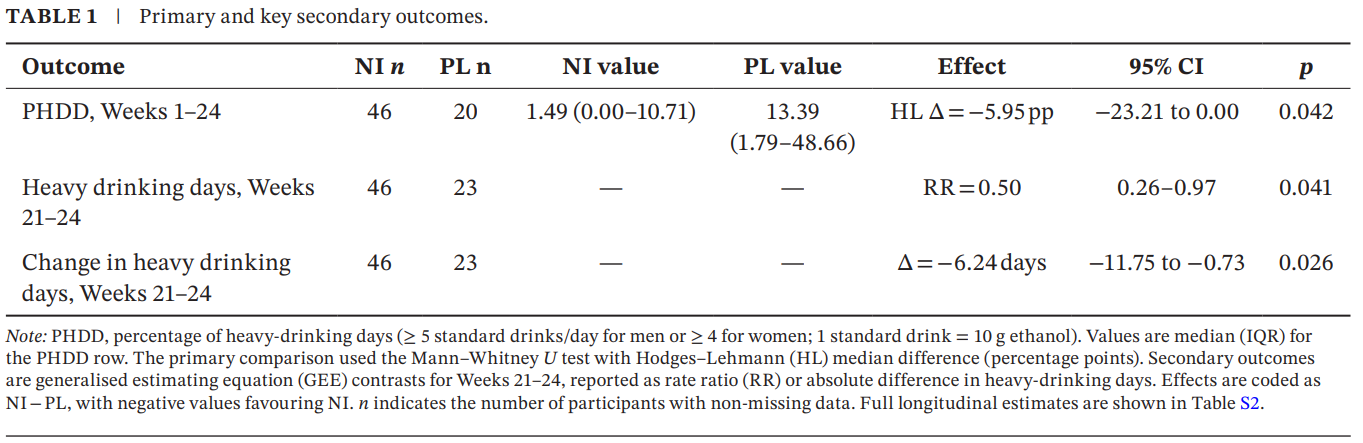
Long-acting naltrexone is a first-line pharmacotherapy for alcohol use disorder (AUD), but clinical response is heterogeneous and the underlying biology remains incompletely understood. In a randomised, double-blind, placebo-controlled trial of naltrexone implants (n = 70), the prespecified primary endpoint—percentage of heavy-drinking days (PHDD) over 24 weeks—favoured naltrexone (median 1.49% vs. 13.39%; p = 0.042). In a prespecified Week-12 mechanistic lipidomics substudy, untargeted liquid chromatography–mass spectrometry (LC–MS) profiling was performed in a responder-enriched subset comprising naltrexone responders (RN, n = 18), placebo-treated participants (PL, n = 10) and age- and BMI-matched healthy male controls (HC, n = 10). We derived membrane-related indices reflecting two prespecified axes of phospholipid remodelling: headgroup balance (PC/PE) and acyl-chain composition (arachidonic acid [AA] and n-3 polyunsaturated fatty acids within phospholipid pools). RN showed higher PC/PE and coordinated acyl-chain shifts versus PL, with species-level changes preferentially moving toward the healthy-control direction. Exploratory analyses in naltrexone nonresponders (NR, n = 10) revealed partial Lands-cycle-related shifts but lacked the broader dual-axis configuration observed in RN. In RN + PL (n = 28), higher n-3 in PE and lower AA in PE at Week 12 were prospectively associated with greater subsequent heavy-drinking burden. These findings support a dual-axis membrane remodelling phenotype associated with naltrexone response and prospectively linked to heavy-drinking burden in AUD, providing a biologically grounded framework for future mechanistic and biomarker studies.
Download PDF