
A minimum estimate of 7 600 deaths directly related to the use of drugs occurred in the European Union in 2024.
At the end of 2025, the EUDA was monitoring 1 050 new psychoactive substances, 50 of which
were first reported in Europe in 2025.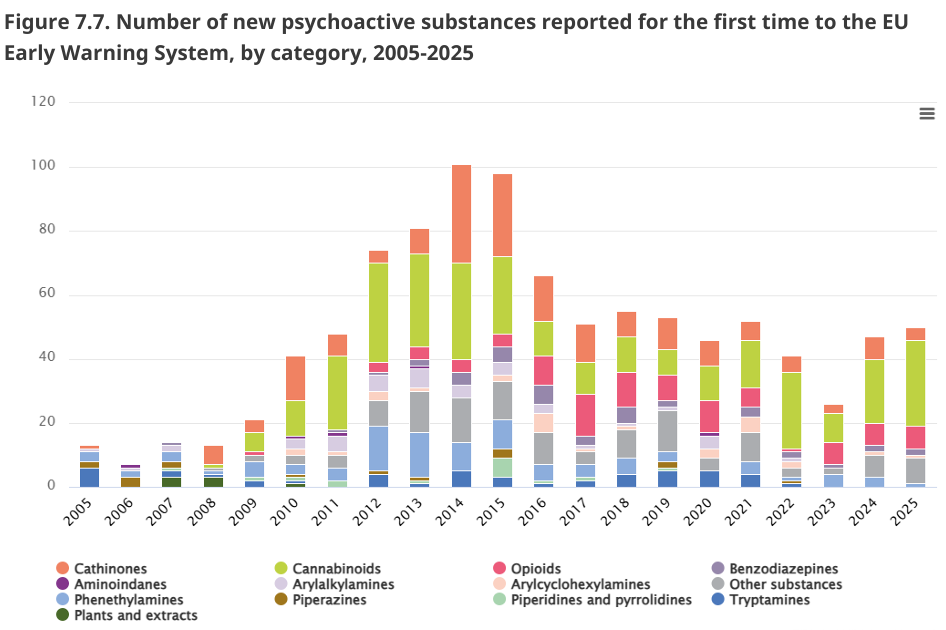
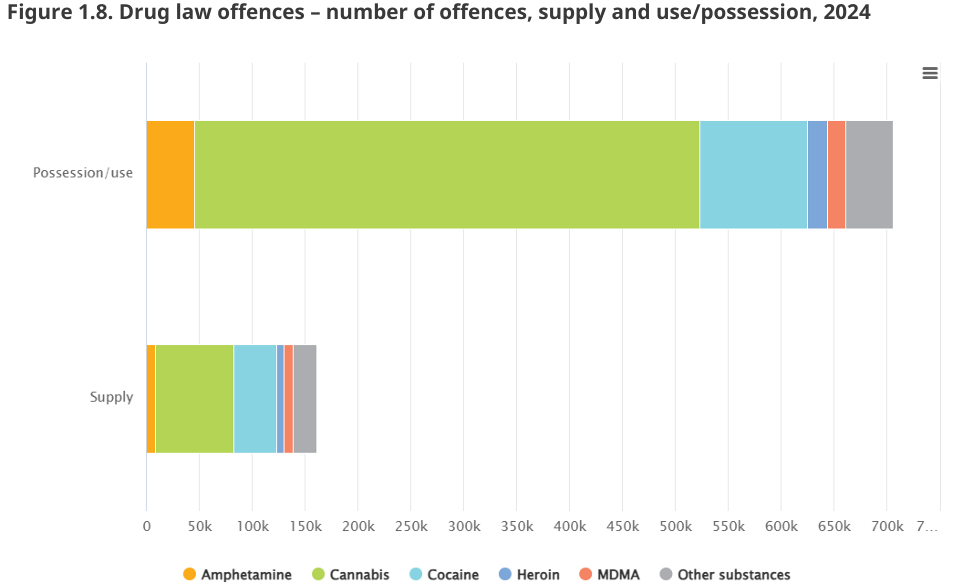
Of the estimated 1.6 million drug law offences, the drug mentioned in the offence is reported in just under 871 000 offences, of which 706 000 were for possession or use, 161 000 were for supply-related offences and 4 000 were for other types of offences.
Cannabis
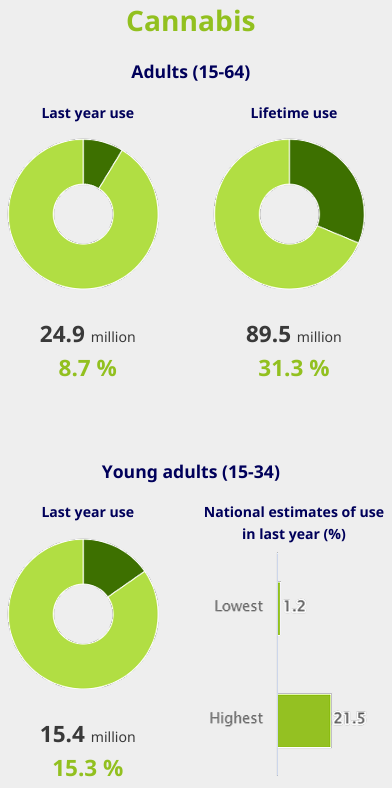
Last year cannabis use among the EU population aged 15 to 34 is estimated at 15.3% (15.4 million), with males being typically twice as likely to report use as females. Among 15- to 24-year-olds, an estimated 18.0% (8.6 million) used cannabis in the last year, and 9.6% (4.6 million) used the drug in the last month. It is estimated that around 1.6% (4.5 million) of adults (aged 15 to 64) and 2.3% (2.3 million) of young adults (aged 15 to 34) are daily or almost daily cannabis users (that is, using the drug on 20 days or more in the last month).
People entering specialist drug treatment for problems related to cannabis use accounted for 33% of all treatment demands reported in the European Union, Norway and Türkiye in 2024. Of the estimated 104 000 clients, about 62 000 were first-time entrants. Cannabis was the main problem drug most frequently cited by new treatment clients, accounting for 41% of all first time treatment entrants.
In 2024, the average THC content of cannabis resin seized in the European Union was 24.6%, twice that of herbal cannabis, at 12%. Indexed trends show that the average THC content of resin increased by 66% between 2014 and 2024, whereas that of herbal cannabis increased by 19% over the same period.
In 2025, European countries identified 27 new cannabinoids, 16 of which were semi-synthetic cannabinoids, representing over 50% of the new substances first reported to the EU Early Warning System that year.
Czechia, Germany, Luxembourg and Malta permit limited home cultivation.
Cocaine
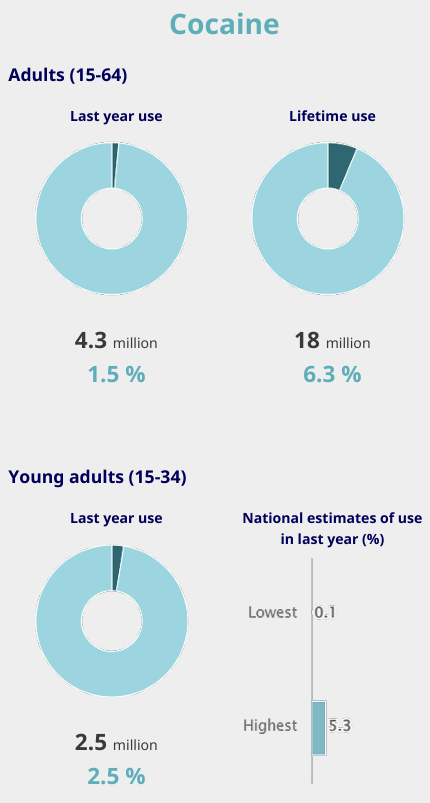
In the European Union, surveys indicate that 2.5 million 15- to 34-year-olds (2.5% of this age group) used cocaine in the last year . Of the 14 European countries that have conducted surveys since 2023, seven reported higher estimates than their previous comparable survey and four reported a stable trend.
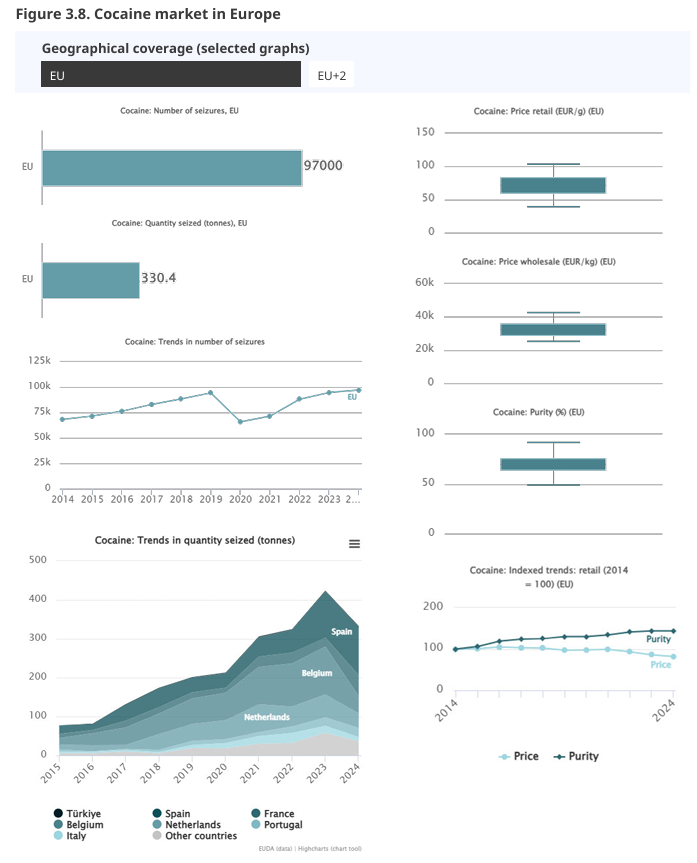
In 2024, the quantity of cocaine seized by EU Member States decreased to 330 tonnes from 419 tonnes in 2023. However, against a backdrop of increased cocaine production in South America, the number of seizures increased, suggesting shifting trafficking routes and methods rather than a decrease in the quantities shipped to Europe.
The average purity of cocaine at retail level ranged from 48% to 92% across Europe in 2024, with half of the countries reporting an average purity between 64% and 75%. While the price of cocaine at retail level has decreased over the past decade, cocaine purity has been on an upward trend, and in 2024 reached a level 44% higher than the index year of 2014.
Synthetic stimulants
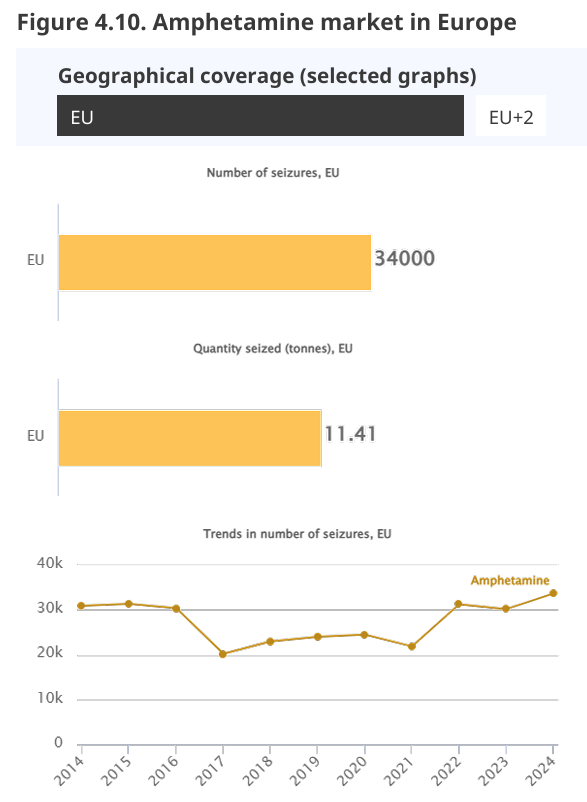
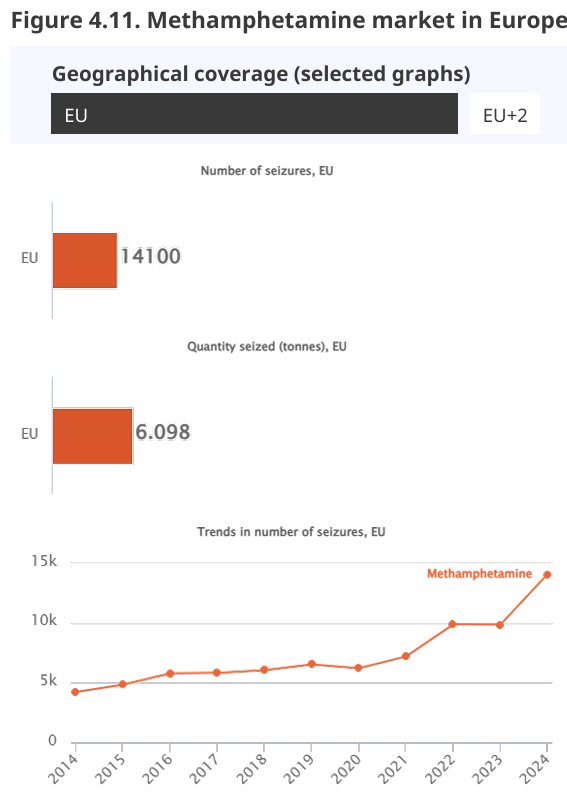
In 2024, EU Member States reported 34 000 seizures of amphetamine, amounting to 11.4 tonnes (10.2 tonnes in 2023). EU Member States reported 14 100 seizures of methamphetamine amounting to 6.1 tonnes in 2024 (1.8 tonnes in 2023).The total quantity of synthetic cathinones reported to the EU Early Warning System as seized or imported by EU Member States in 2024, in all forms, amounted to 48.5 tonnes (37 tonnes in 2023, 27 tonnes in 2022).
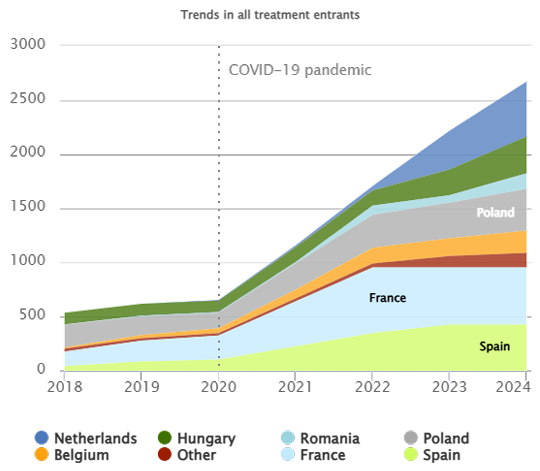
Data from countries that report treatment entrants for synthetic cathinones show an increase from 536 clients in 2018 to 2 671 clients in 2024, 95% of whom are accounted for by France, the Netherlands, Spain, Poland, Hungary, Belgium and Romania.
Ten EU Member States reported dismantling 252 methamphetamine laboratories in 2024 (250 in 2023).In 2024, 9 EU Member States reported dismantling 110 amphetamine laboratories (93 in 2023).
MDMA
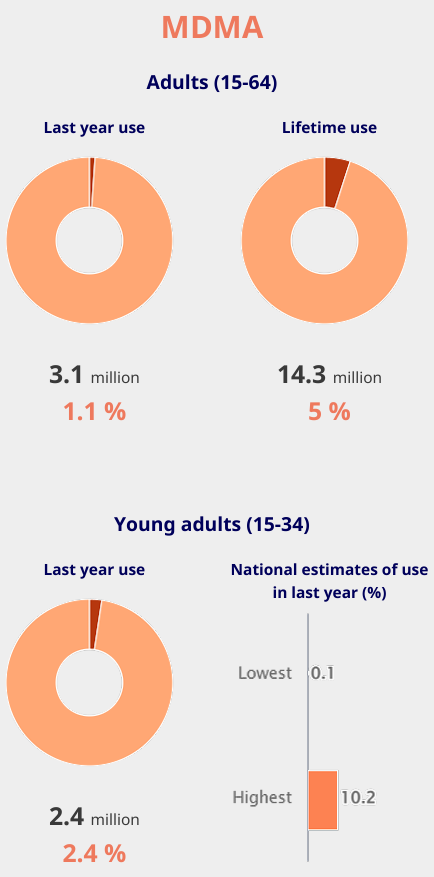
Surveys conducted by 27 EU Member States between 2015 and 2024 suggest that 2.4 million young adults (aged 15 to 34) used MDMA in the last year (2.4% of this age group), with 2.1% (1.0 million) of those aged 15 to 24 years estimated to have used MDMA in the last year.
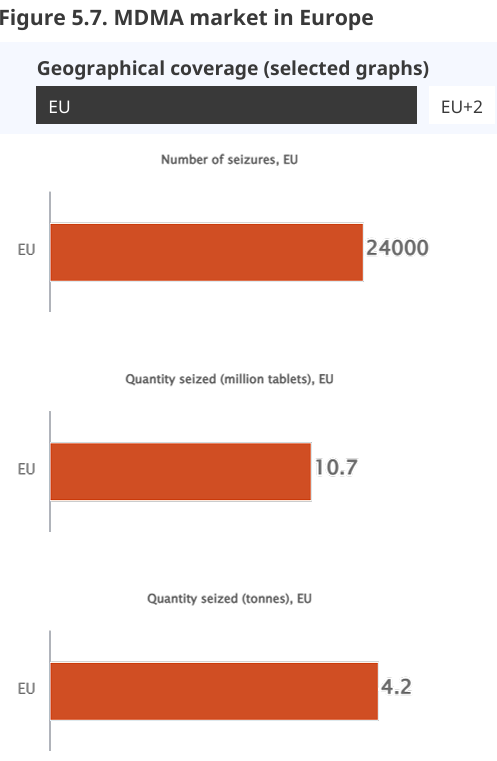
In 2024, EU Member States reported 24 000 seizures of MDMA (17 000 in 2023), amounting to 4.2 tonnes of MDMA powder (3.6 tonnes in 2023) and 10.7 million MDMA tablets (7.2 million in 2023). Türkiye seized 5.1 million MDMA tablets in 2024 (5.2 million in 2023).
Opioids
It is estimated that 0.3% of the EU adult population, or around 850 000 people, used opioids in 2024 (860 000 in 2023).Overall, opioid agonist treatment was received by about 60% of the estimated 855 000 high-risk opioid users in the European Union in 2024, an estimated 505 000 (517 000 including Norway and Türkiye).
The Taliban’s ban on opium poppy cultivation in Afghanistan since April 2022 has significantly reduced opium productionn.The relative stability of heroin availability in Europe is partly attributed to the existence of large stockpiles in Afghanistan, estimated at around 12 000 tonnes of opium in 2025.Pakistan, particularly the province of Balochistan, bordering Afghanistan and home to major seaports linked to drug trafficking to Europe, has also emerged as a source of opium and heroin, with satellite imagery analysis suggesting over 9 000 hectares of opium poppy cultivation in 2025, potentially rivalling Afghanistan’s output.Elsewhere in Asia, Myanmar’s opium poppy cultivation reached a 10-year peak of more than 45 000 hectares in 2025. European countries will need to remain vigilant for signs of market shifts over the next years, including increased synthetic opioid or stimulant use.
Heroin and other opioids market data
Seizures of heroin reported by EU Member States have declined from 9.5 tonnes in 2021 to 3.6 tonnes in 2024, with year-on-year declines of 16% (to 8.0 tonnes) in 2022, 33% (to 5.4 tonnes) in 2023 and a further 33% in 2024. The quantity seized in 2024 is similar to the quantities seized in 2015 (3.7 tonnes) and 2016 (3.5 tonnes).
Overall, EU Member States reported 15 500 heroin seizures in 2024 (17 000 seizures in 2023). France (1.045 tonnes), Bulgaria (868 kilograms) and the Netherlands (376 kilograms) reported the largest quantities. Türkiye seized 4.3 tonnes of heroin in 2024, 31% more than in 2023 (3.3 tonnes).
The average purity of brown heroin at the retail level ranged from 8% to 33% in 2024, with half of the countries reporting an average purity between 10% and 21%. Indexed trends indicate the average price of brown heroin declined by 25% between 2014 and 2024. Over the same period, the purity of the drug fluctuated but has fallen markedly over the last four years.
Countries reported 1 063 seizures of synthetic opioids, amounting to 35.5 kilograms, to the EU Early Warning System in 2024, an increase from the 22 kilograms seized in 2023. The quantity of nitazenes seized decreased, from 10 to 7 kilograms seized in 2024.Of the seizures of new opioids reported, 26% contained metonitazene, 25% contained carfentanil, 22% contained tramadol and 10% contained protonitazene.Of the 35.5 kilograms of material seized, 31% (11.1 kilograms) contained 2-methyl-AP-237, 21% (7.6 kilograms) contained tramadol and 16% (5.6 kilograms) contained spirochlorphine. A small number of countries accounted for most of the synthetic opioid seizures: Germany, Estonia, Latvia and Lithuania reported 62% of the seizures and 70% (25.0 kilograms) of the quantity seized.
Approximately 19 000 offences for heroin use or possession were reported in 2024.
Twenty sites involved in the cutting and packaging of heroin were dismantled in the European Union in 2024 (15 in the Netherlands, 4 in Czechia, 1 in Italy).
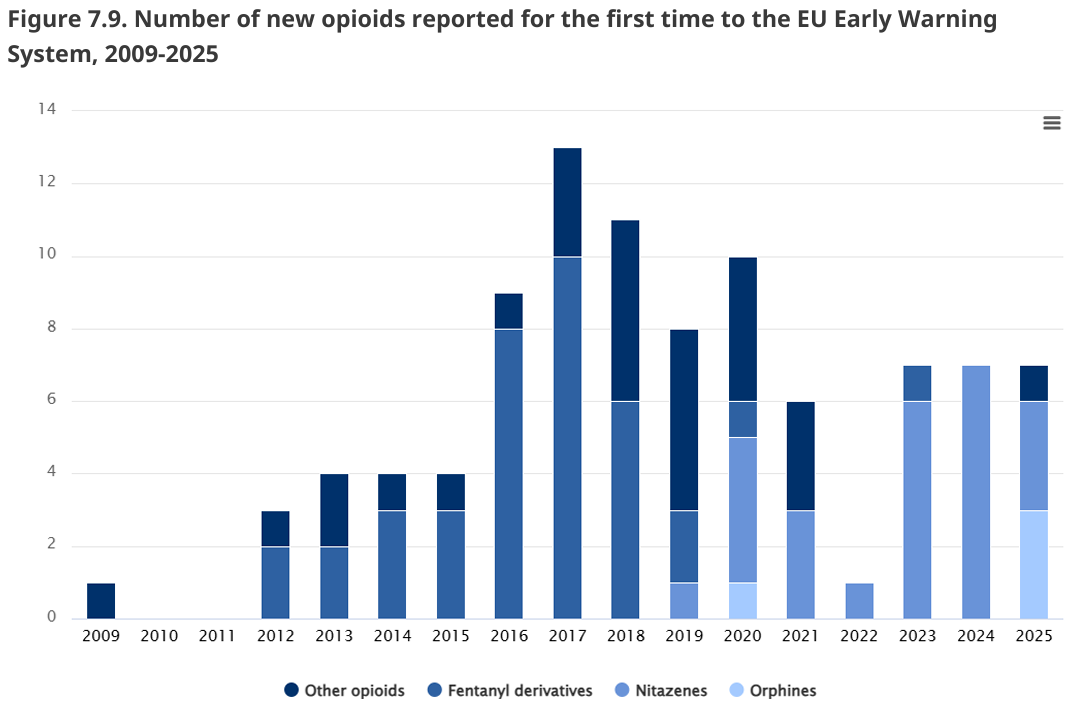
Since 2009, a total of 95 new opioids have been identified on the European drug market, with 7 new substances notified in 2025, 6 of which were highly potent new opioids: nitazenes (3) and orphines (3), which can be hundreds of times more potent than heroin. To date, 25 nitazenes have been identified in Europe.Reflecting a broadening of overdose risk, in 2024 authorities in 10 countries detected more than 50 000 nitazene‑containing tablets, up from 23 000 in 2023 and only 380 in 2022.Over the period 2024-2025, fentanyl has been associated with over 100 drug-induced deaths in Bulgaria.
New psychoactive substances
At the end of 2025, the EUDA was monitoring 1 050 new psychoactive substances, 50 of which were first reported in Europe in 2025.
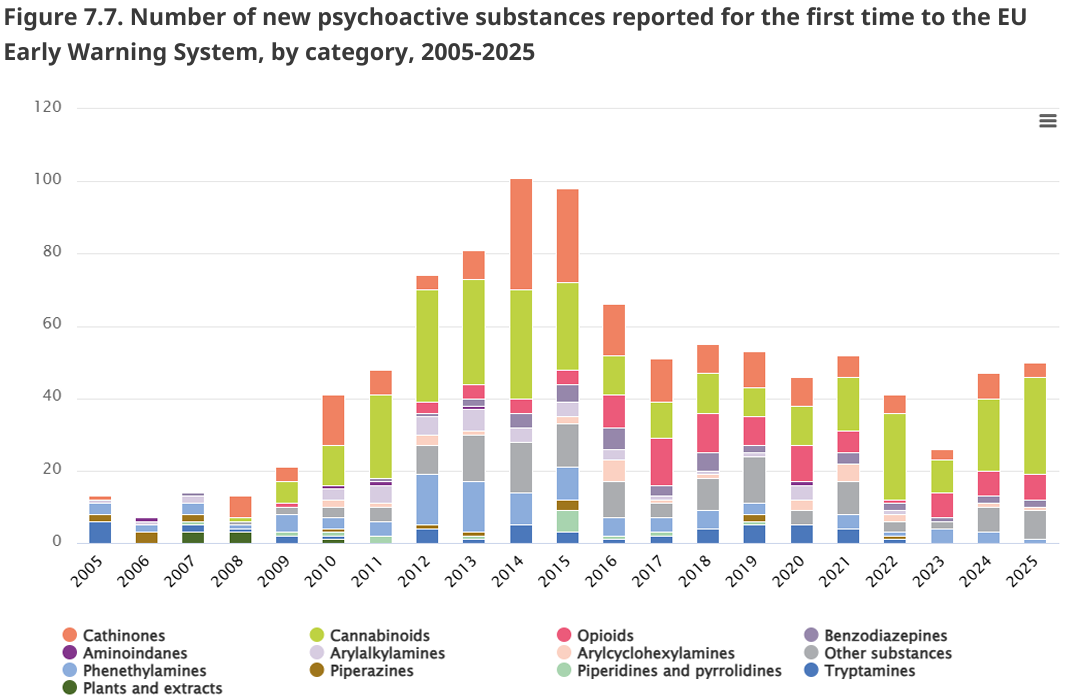
EU Member States reported a record quantity of new psychoactive substances to the EU Early Warning System, amounting to 55 tonnes imported or seized.Reported seizures and imports of synthetic cathinones in the European Union increased by 11.5 tonnes to 48.5 tonnes in 2024, with preliminary data indicating continued large quantities through the first half of 2025.EU Member States reported dismantling 63 synthetic cathinone production sites, some of which were large-scale, in 2024 (54 in 2023)
supply and seizure
Synthetic drug production facilities dismantled in the European Union in 2024 were manufacturing many different substances, including amphetamine, methamphetamine, synthetic cathinones and MDMA. Some illicit laboratories produce multiple synthetic stimulants with similar precursor and manufacturing equipment requirements. Innovation in production processes is evident from seizures of chemicals used to manufacture the precursors needed to produce synthetic drugs. The use of a wider range of chemicals to produce new substances and pursue different synthesis processes creates a shifting and complex challenge for customs, law enforcement agencies and regulators. Illicit drug producers continually switch to uncontrolled chemicals to evade international precursor controls. Reflecting this cycle, large quantities of glycidic derivatives of BMK and PMK, used in the manufacture of amphetamines and MDMA, were seized in 2024. Preliminary 2025 data indicate that new BMK alternatives have emerged, which will be the subject of EUDA risk assessments in 2026. These ‘designer precursors’ are chemically similar to scheduled precursors, purpose-made to circumvent controls, and usually have no known legitimate use.